
Water Damaged Ceiling Repair in McKinney, Texas
A ceiling water stain may be the first visible sign of a leak, but the mark itself does not show how far moisture has spread. Professional ceiling water damage repair addresses both the visible stain and the hidden moisture behind it. Water can travel from a roof opening, plumbing line, upstairs bathroom, air-conditioning drain, or overflowing fixture before collecting in the ceiling. Water damage ceiling repair should begin by identifying and addressing the source of moisture. Repairing the finish before the leak is resolved can allow the problem to return.
Common Causes of Ceiling Water Damage
Typical causes include roof leaks after heavy rain or wind, plumbing leaks between floors, leaking bathrooms, failed appliance connections, HVAC condensation problems, and water overflowing from a fixture above the ceiling. Storm-related roof damage can allow rainwater to enter attic spaces and insulation. In multi-story properties, a leak in an upstairs room may show up as a stain or soft patch on the ceiling below.
Warning Signs to Watch For
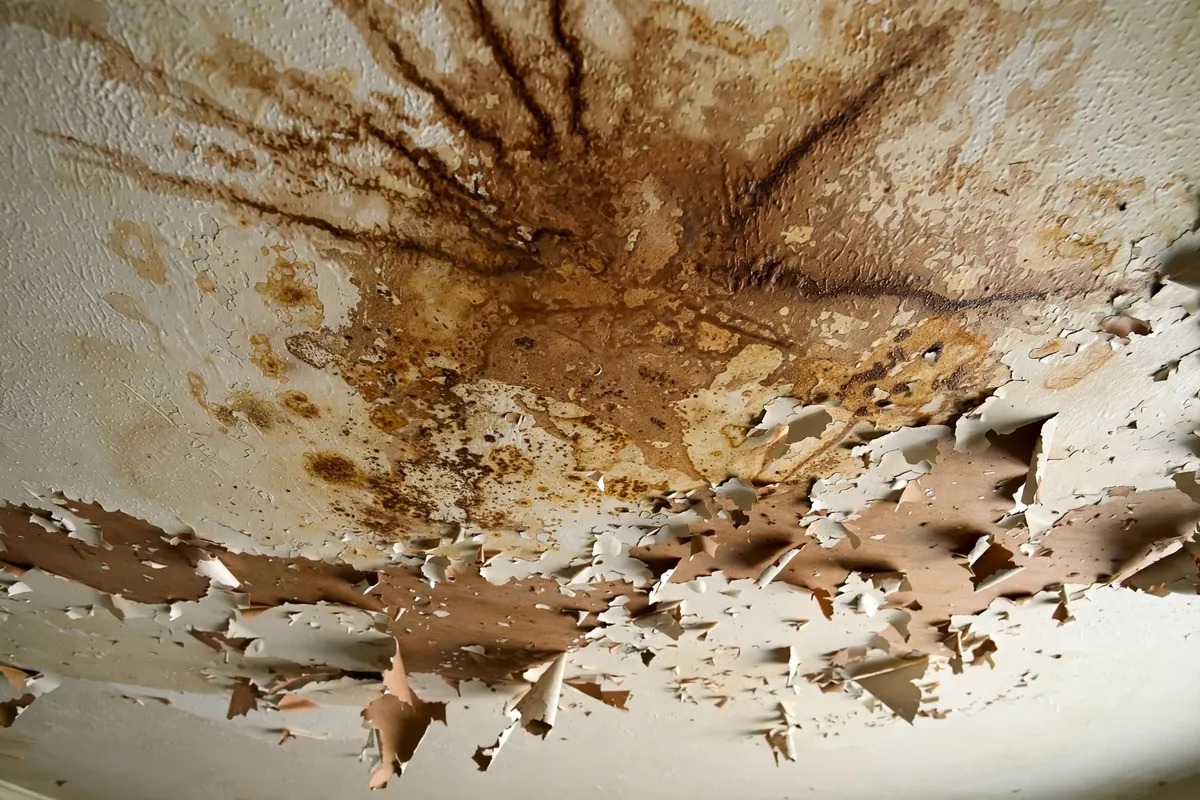
Look for brown or yellow water stains, bubbling paint, peeling texture, cracked drywall tape, sagging panels, damp insulation, or a musty odor. A ceiling that bows downward or feels unstable can be a safety concern. Keep people away from the area and do not puncture or press on a bulging ceiling. If water is near electrical fixtures, avoid contact and arrange a safe assessment.
Ceiling Water Stain Removal and Drywall Assessment
Ceiling water stain removal is only appropriate after the source has been corrected and the materials have been evaluated. A stain may remain after the ceiling dries, but covering it with paint alone does not address wet drywall or insulation. The inspection should determine whether the drywall is sound, whether insulation is affected, and whether moisture remains above the visible surface. Materials that have lost strength or cannot be adequately dried may need removal and replacement.
How the Repair and Restoration Process Works
1. Find and stop the source
Roofing, plumbing, or HVAC issues may need to be corrected by the relevant trade. The repair plan should account for the original cause rather than treat only the visible mark.
2. Inspect and dry affected materials
The ceiling and nearby walls are checked for dampness. Appropriate extraction, ventilation, or drying equipment may be used where needed, and moisture readings can help determine when drying is complete.
3. Remove damaged material when necessary
Loose, sagging, or deteriorated drywall may need careful removal. Work should be planned to protect occupants and nearby belongings, especially if insulation or concealed cavities are affected.
4. Repair and refinish
Once the area is dry and the cause is addressed, repair may include replacing drywall, finishing joints, matching texture, priming, and painting. The extent of work depends on the condition of the ceiling and surrounding materials.
When to Get Professional Help
Arrange a professional assessment when a ceiling stain grows, the ceiling feels soft, drywall begins to sag, water continues to drip, or the leak source is unclear. Multiple stains or damage that returns after painting may indicate an unresolved moisture problem. For properties in McKinney, a storm-related roof leak should be evaluated alongside any interior water damage so the repair plan addresses both entry point and interior impact.
Related Water Damage Services in McKinney
Depending on the cause and extent of the damage, you may also need water extraction, water damage cleanup, flood damage restoration, water mitigation, or sewage cleanup. Visit the homepage to learn more about services available in McKinney.
Request Help in McKinney, TX
If you have noticed water damage or need help understanding the next steps, contact our team to discuss the situation. A clear assessment can help you understand the affected areas and what work may be appropriate.